
close
Choose Your Site
Global
Social Media


Did you know most bottled water multipacks rely on PE shrink film for bottles for secure packaging? This film tightly wraps bottles, protecting them during transport. PE shrink film is essential for keeping beverages safe and visible on shelves. In this post, you’ll learn what PE shrink film is, why it matters, and its key benefits for bottled water and beverage multipacks.
Table of Contents
PE shrink film mainly consists of two types of polyethylene: Low-Density Polyethylene (LDPE) and Linear Low-Density Polyethylene (LLDPE). LDPE provides excellent clarity and flexibility, making it easy to shrink tightly around bottles. LLDPE adds toughness and puncture resistance, which helps protect products during handling and transport. Often, manufacturers blend these materials to balance strength, stretchability, and clarity, optimizing performance for bottled water and beverage multipacks.

PE shrink film offers several key properties that make it perfect for bottled packaging:
High shrinkage capability: It conforms tightly to bottle shapes, ensuring a snug fit.
Flexibility: It stretches without tearing, accommodating various bottle sizes.
Durability: Resistant to punctures, tears, and abrasions, it protects bottles during shipping.
Moisture resistance: Keeps contents dry and safe from environmental factors.
Clarity: Enhances product visibility, important for branding and consumer appeal.
Lightweight: Adds minimal weight to packaging, reducing shipping costs.
These properties ensure the film securely bundles multiple bottles or wraps individual ones without compromising protection or presentation.
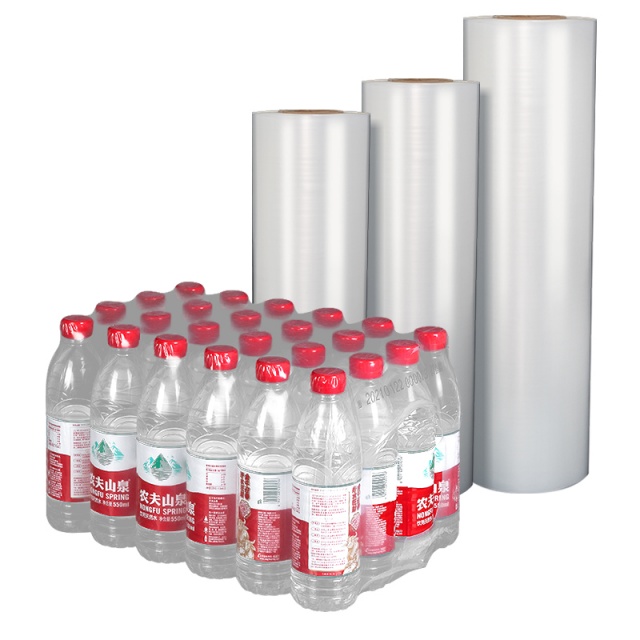
Other shrink films include Polyvinyl Chloride (PVC) and Polyolefin (POF). Compared to these, PE shrink film stands out in several ways:
Feature | PE Shrink Film | PVC Shrink Film | POF Shrink Film |
|---|---|---|---|
Environmental Impact | Highly recyclable, can contain recycled content | Less environmentally friendly, limited recycling | Recyclable, but more costly |
Flexibility & Strength | Excellent flexibility and puncture resistance | Less flexible, prone to cracking | Good flexibility, but less tough than PE |
Cost | Generally most cost-effective | Often cheaper but lower quality | More expensive |
Clarity | Good clarity, suitable for branding | High clarity | Very clear and glossy |
Heat Shrink Efficiency | High shrink ratio, fast shrinking | Moderate shrink ratio | High shrink ratio but slower |
PE shrink film offers a balanced mix of cost efficiency, sustainability, and performance, making it a preferred choice for bottled water and beverage multipacks packaging.
Tip: When selecting PE shrink film, consider blends of LDPE and LLDPE to achieve optimal strength, flexibility, and clarity for your bottled beverage packaging needs.
PE shrink film works by applying heat, causing the film to contract tightly around bottles or multipacks. This process typically uses shrink tunnels or heat guns. A shrink tunnel blows hot air evenly around the wrapped product, ensuring uniform shrinking. Heat guns allow more manual control for smaller batches or unique shapes. The film starts loose but quickly tightens as heat activates its molecular structure. This shrinking action molds the film snugly around bottles, creating a secure package.
Shrink wrap machinery varies from basic manual stations to fully automated high-speed lines. Manual systems suit smaller production runs, allowing operators to place film and apply heat by hand. Automated machines feed film continuously, wrap bottles, then pass them through shrink tunnels. These machines boost efficiency and ensure consistent shrink quality, critical for large-scale beverage packaging.
PE shrink film’s flexibility and elasticity enable it to stretch over bottles before shrinking back. When heated, the film’s molecules realign and contract, pulling the film tight against bottle contours. This tight fit reduces movement between bottles in multipacks, stabilizing the load.
For multipacks, the film wraps around the entire group, shrinking to hold bottles firmly together. It adapts to various bottle shapes and sizes, from slim water bottles to wider soda containers. This conforming ability ensures multipacks stay intact during handling, stacking, and transport.
Besides bundling, PE shrink film offers excellent protection:
Dust and dirt barrier: The tight film seal keeps dust and dirt off bottles, maintaining product cleanliness.
Moisture resistance: PE film resists water vapor, protecting labels and bottles from moisture damage.
Tamper evidence: Shrink film shows visible signs if disturbed, deterring tampering and ensuring consumer safety.
Physical protection: The film cushions bottles slightly, reducing scratches and scuffs during shipping.
This protective layer helps maintain product quality and presentation from factory floor to retail shelf.
Tip: Select shrink tunnels with adjustable temperature controls to optimize film shrinking for different bottle sizes and film blends, ensuring perfect fit and protection every time.
PE shrink film comes in several formats to suit different packaging needs and machinery types:
Centre Fold: The film is folded in the middle, creating two layers. It’s ideal for packaging multiple bottles side by side, offering excellent coverage and strength.
Lay Flat: A single flat sheet of film. It’s versatile for wrapping individual bottles or smaller multipacks, often used in manual or semi-automatic operations.
Tubular: A seamless tube of film. It provides a continuous wrap around bottles, perfect for high-speed automated lines handling large volumes.
Choosing the right format depends on your packaging line speed, bottle configuration, and desired presentation.
PE shrink film can be customized to enhance functionality and branding:
Perforations: Small holes added to the film improve breathability, useful for products sensitive to moisture or gases.
Printing treatments: Surface treatments enable high-quality printing for logos, instructions, or promotional messages directly on the film, boosting brand visibility.
Additives: Slip agents reduce friction for smoother machine feeding; anti-static additives prevent static buildup; anti-fog additives maintain clarity in humid conditions.
These options allow tailoring the film to specific packaging requirements and marketing goals.
PE shrink film’s versatility extends to its compatibility with various packaging operations:
Manual lines: Lay flat or centre fold films work well for hand wrapping or small batch production, offering ease of handling and quick application.
Semi-automatic lines: Centre fold or tubular films support moderate speeds, balancing efficiency and operator control.
Fully automated lines: Tubular films excel in high-speed environments, feeding continuously through machines that wrap and shrink multipacks rapidly with consistent quality.
This adaptability makes PE shrink film a practical choice for businesses scaling production or handling diverse packaging scenarios.
Tip: Select the film format and customization features based on your packaging line's speed and product needs to maximize efficiency and brand impact.
PE shrink film offers significant cost advantages for bottled beverage packaging. Its production benefits from efficient manufacturing processes that maximize material yield and reduce waste. The blend of LDPE and LLDPE allows manufacturers to produce films that are strong yet thin, reducing raw material consumption without sacrificing performance. This means businesses pay less per package while maintaining high-quality protection.
Additionally, PE shrink film’s lightweight nature lowers transportation costs, as it adds minimal weight to the final product. Its high shrink ratio ensures tight packaging, minimizing the need for extra fillers or secondary packaging materials. These efficiencies translate into lower overall packaging expenses and faster packaging line speeds, boosting productivity.
Many PE shrink films incorporate recycled polyethylene, aligning with growing sustainability demands. Using recycled content reduces reliance on virgin plastics, lowering environmental impact and often reducing raw material costs. Modern recycling technologies enable manufacturers to include up to nearly 100% recycled content without compromising clarity, strength, or shrink properties.
Incorporating recycled material requires careful quality control to maintain consistent film performance. Advances in extrusion and blending ensure recycled content blends seamlessly with virgin resins. As a result, packaging retains durability and protection qualities essential for bottled water and beverage multipacks.
PE shrink film is fully recyclable, making it an eco-friendly choice for beverage packaging. Unlike some other shrink films, PE can be collected, processed, and reintroduced into the production cycle. This supports circular economy principles by reducing plastic waste and conserving resources.
Many recycling programs accept PE shrink film, especially if it is clean and free of contaminants like adhesives or inks. Some manufacturers offer take-back or recycling initiatives to help customers manage film waste responsibly. Choosing PE shrink film helps companies meet sustainability goals and respond to increasing consumer demand for environmentally conscious packaging.
Tip: Opt for PE shrink films containing recycled content to reduce costs and environmental impact while maintaining packaging quality and performance.
Choosing the right PE shrink film starts with understanding your product and packaging needs. Key factors include:
Bottle size and shape: Different bottles require films with varying stretch and shrink capabilities. Slim bottles may need thinner films with high clarity, while larger or irregular shapes benefit from tougher, more elastic films.
Multipack configuration: The number and arrangement of bottles in a multipack affect film width and format choice. Centre fold films suit side-by-side bottles, while tubular films wrap well around larger bundles.
Packaging line speed: High-speed lines need films designed for fast shrinking without tearing or sticking. Films with slip additives or anti-static properties help maintain smooth operation.
Environmental conditions: Consider if the packaging will face moisture, temperature changes, or rough handling. Films with anti-fog or enhanced puncture resistance provide extra protection.
Branding requirements: If printing or custom graphics are important, select films compatible with high-quality printing treatments.
Sustainability goals: Films containing recycled content or fully recyclable options align with eco-friendly packaging strategies.
Packaging machinery must match your film choice and production volume. Common options include:
Manual shrink wrap stations: Ideal for low-volume or custom packaging. Operators manually wrap bottles and use heat guns or small tunnels to shrink film.
Semi-automatic machines: These combine operator input with mechanized film feeding and shrinking. They increase throughput while maintaining some flexibility.
Fully automatic shrink wrap systems: Designed for high-speed production, these machines feed, wrap, and shrink film continuously. Tubular films are often used here for efficiency.
Shrink tunnels: Essential for all systems, shrink tunnels provide controlled heat to activate film shrinking evenly. Adjustable temperature and conveyor speed ensure optimal results.
Specialized equipment: Some lines include bundling machines or robotic arms for complex multipack configurations or delicate bottle handling.
Maximizing efficiency and quality requires matching film, machinery, and process controls:
Test film compatibility: Trial runs help confirm the film shrinks uniformly on your bottle types without damage or poor fit.
Adjust machine settings: Temperature, conveyor speed, and air flow in shrink tunnels must align with film properties and bottle size.
Maintain equipment: Regular cleaning and calibration prevent film jams, static buildup, or uneven shrinking.
Train operators: Skilled operators spot issues early and adjust processes to maintain product quality.
Integrate automation: Use sensors and controls to monitor shrink quality and reduce waste.
Plan for sustainability: Choose films and equipment that reduce energy use and film waste.
Together, these steps ensure your bottled water packaging is secure, attractive, and cost-effective.
Tip: Evaluate your bottle types, production volume, and branding needs carefully to select PE shrink film and machinery that deliver consistent, high-quality packaging with minimal downtime.
One of the primary uses of PE shrink film is bundling several bottles into a single multipack. The film wraps around the grouped bottles, then shrinks tightly to hold them together securely. This bundling simplifies handling, stocking, and transport, reducing the risk of bottles separating or falling during shipment. It also enables retailers to offer convenient multipack options to consumers, increasing sales potential.
The film’s flexibility allows it to conform around various bottle shapes and sizes, from slim water bottles to larger soda containers. This adaptability means manufacturers can create multipacks of different quantities and configurations without changing packaging materials. The tight shrink fit stabilizes the load, preventing bottles from shifting and minimizing damage risk.
Besides multipacks, PE shrink film is often used for wrapping individual bottles. This application provides an extra protective layer against dust, moisture, and scratches during storage and transport. It also offers tamper evidence, reassuring consumers that the product is unopened and safe to use.
Individual wrapping with PE shrink film enhances brand presentation. The film’s clarity allows printed graphics, logos, or promotional messages to be applied directly onto its surface. This creates a sleek, professional look that highlights product features and differentiates brands on the shelf. Custom printing can also include barcodes, instructions, or regulatory information without additional labeling steps.
PE shrink film plays a crucial role in securing bottled products during storage and transit. The film’s tight fit keeps bottles bundled firmly, preventing them from moving or tipping over on pallets or in cartons. This reduces the chance of breakage, leaks, or label damage.
The film acts as a barrier against external contaminants such as dust, dirt, and moisture, preserving the product’s quality. Its puncture resistance helps shield bottles from impacts or abrasions during handling. Additionally, shrink film’s tamper-evident nature discourages unauthorized access, ensuring products reach customers intact.
Using PE shrink film for securing bottles streamlines warehouse operations by improving pallet stability and reducing repacking needs. It also supports efficient loading and unloading, saving time and labor costs.
Tip: Use PE shrink film’s versatility to combine multipack bundling and individual bottle wrapping, enhancing both protection and branding while optimizing packaging efficiency.
PE shrink film is highly durable, designed to withstand typical handling, transport, and storage conditions. Its blend of LDPE and LLDPE offers excellent puncture and tear resistance, preventing rips or holes that could compromise the package. This toughness keeps bottles securely bundled, reducing the risk of bottle damage or label abrasion. Moreover, the film maintains its integrity even in varying temperatures and humidity levels, ensuring protection from environmental factors like moisture and dust throughout the supply chain.
Yes, PE shrink film is recyclable, making it an environmentally responsible packaging choice. It can be collected and processed through many municipal recycling programs that accept polyethylene plastics. To maximize recyclability, the film should be clean and free from contaminants such as adhesives, inks, or food residues. Many manufacturers also produce PE shrink films containing recycled content, supporting a circular economy by reusing materials. Proper disposal and recycling help reduce plastic waste and lower the environmental footprint of bottled water packaging.
PE shrink film offers several customization options to enhance branding and marketing impact:
Printing: High-quality printing treatments allow logos, product information, and promotional graphics directly on the film.
Surface treatments: Special coatings improve print adhesion and color vibrancy.
Perforations: Custom perforation patterns can be added for breathability or easy opening.
Additives: Slip agents and anti-static additives improve handling and appearance.
Film thickness and clarity: Adjusting these can enhance the look and feel to match brand identity.
These options help brands create eye-catching packaging that stands out on shelves and communicates product value effectively.
PE shrink film is highly versatile and suits most bottle shapes and sizes. Its excellent stretch and shrink properties let it conform tightly to slim, round, square, or irregular bottles. Whether wrapping single bottles or multipacks, the film molds snugly around contours, ensuring a secure fit. For unusual shapes or very large bottles, film thickness and blend can be adjusted to maintain durability and shrink performance. This adaptability makes PE shrink film a go-to solution across diverse bottled water and beverage packaging applications.
Tip: When selecting PE shrink film, consider your product’s shape, branding needs, and recycling goals to choose the best film type and customization for durable, eco-friendly packaging.
PE shrink film offers excellent flexibility, durability, and clarity for beverage packaging. It ensures secure bundling and protects bottles during transport. This film is cost-effective and supports sustainability through recyclability and recycled content use. Businesses seeking efficient, eco-friendly packaging should consider PE shrink film for their bottled products. For tailored solutions and expert support, reach out to Wann Guan Plastics, a trusted provider delivering high-quality PE shrink film that maximizes packaging value.
A: PE shrink film for bottles is a flexible polyethylene film that shrinks tightly around bottles when heated, providing secure packaging for bottled water and beverage multipacks.
A: PE shrink film for bottles offers puncture resistance, moisture protection, and tamper evidence, ensuring bottles remain intact and clean throughout shipping and handling.
A: PE shrink film for bottles balances cost-effectiveness, flexibility, and recyclability better than PVC or POF films, making it ideal for beverage multipack packaging.
A: Yes, PE shrink film for bottles can be printed with logos and graphics, and customized with perforations or additives to enhance appearance and functionality.
A: Absolutely, PE shrink film for bottles is recyclable and often contains recycled content, supporting sustainable packaging practices.


