
close
Choose Your Site
Global
Social Media


You use stretch hood film to cover pallet loads. It helps protect items in modern packaging. This film can stretch to fit many shapes and sizes. It makes a tight seal without using heat. You get strong load stability with this film. It also has high tear resistance. It gives full protection from dust, dirt, and moisture.
Stretch hood film is special for these reasons:
It holds goods tightly and stops damage during shipping.
It fits most load sizes and shapes.
It often uses less material, so it saves money and helps the environment.
You will learn how it compares to other ways of wrapping pallets. You will also see why many people pick it for safe product protection.
Stretch hood film gives strong protection to pallet loads. It keeps them safe from dust, dirt, and water. This film is good for the environment and saves money. It uses less material but still stays strong and stable. Stretch hooding machines put the film on fast and well. This helps pack things faster and lowers work costs. Stretch hood film does not need heat like shrink wrap. This makes it safer and easier to use. Many industries use stretch hood film because it works well. Beverages, building materials, and glass companies all benefit from it.
You see stretch hood film as a modern solution for securing pallet loads. This film comes in a tubular shape, which means it forms a continuous sleeve. Manufacturers use a process called co-extrusion to make it. This process combines different layers of materials to create a strong and flexible film. You get a product that is thinner but still holds your goods tightly.
Co-extrusion gives you several benefits:
You use less material without losing strength.
You keep your products secure during transport.
You save money and help the environment with less waste.
Stretch hood film works best with stretch hooding machines. These machines pull the film over your pallet in one smooth motion. You do not need heat to apply this film. This makes the process safer and faster. You may also hear people call it tubular pallet wrapping film because of its shape and use.
Recent advances in technology have improved stretch hood film even more. Manufacturers now use high-performance materials like polyester and polyolefin. They also use smart machines and better quality control. Some films even have special coatings to block UV rays and moisture. These features help protect your products in tough conditions.
Tip: Choose stretch hood film if you want strong, flexible, and eco-friendly packaging for your pallets.
You use stretch hooding machines to apply stretch hood film. The process has several steps:
Product Placement: You place your pallet or item in the machine. Sensors check that everything is ready.
Film Feeding & Stretching: The machine pulls the film from a roll and stretches it to fit your load.
Wrapping & Securing: The film wraps tightly around your pallet. The machine seals the edges to keep everything in place.
Cutting & Ejection: The machine cuts off the extra film. Your wrapped pallet moves to the next step.
Inspection & Adjustment: Sensors check the wrap. If needed, the machine adjusts for the next load.
Stretch hood film covers your pallet without using heat. This is different from shrink wrap, which needs heat to fit the load. You get full coverage on all five sides of your pallet. The film protects your goods from moisture, dust, and UV rays. You keep your products safe and dry, even in outdoor storage.
You can trust stretch hood film to give you strong protection and easy handling. It works well for many types of packaging and helps you move goods safely.
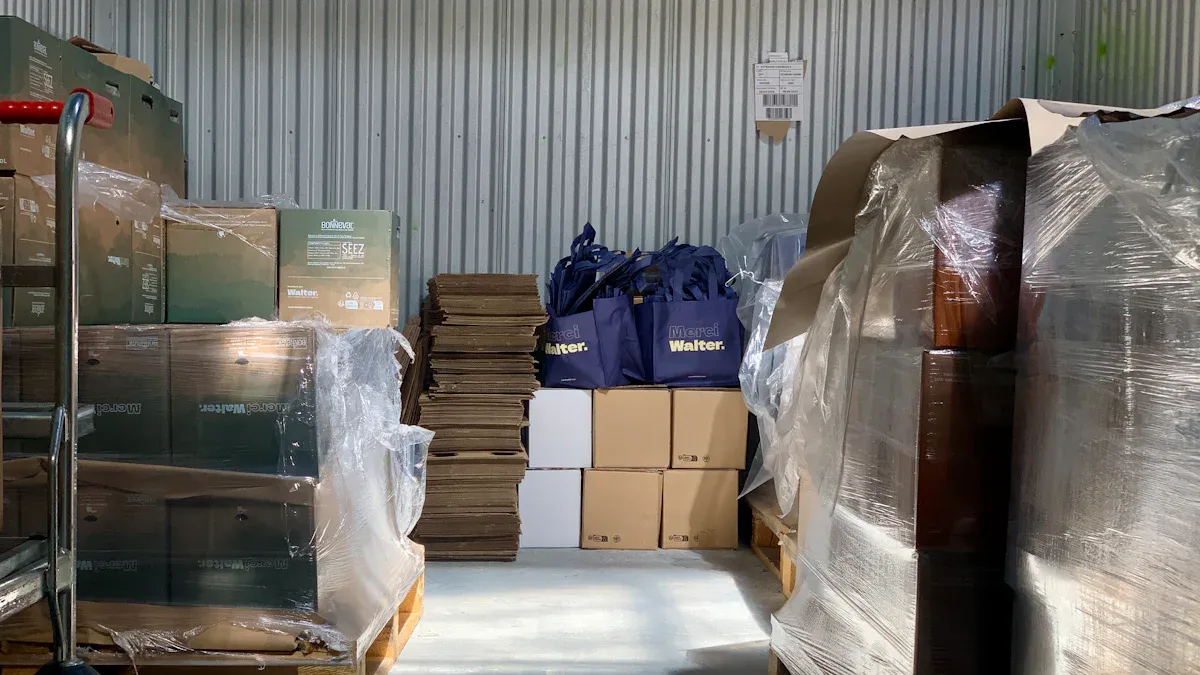
You may wonder how stretch hood film compares to stretch wrap. Both methods help you secure pallet loads, but they work in different ways. Stretch wrap uses a thin plastic film that you wrap around your products by hand or with a machine. Stretch hood film, on the other hand, uses a tubular film that stretches over the entire load.
Here are some key differences:
Stretch hood film covers your pallet in one step, while stretch wrap needs several layers.
You get better load stability with stretch hood film because it holds the load tightly from all sides.
Stretch hood film uses less material, which means you save money and reduce waste.
You spend less time changing film rolls with stretch hood film, so your work goes faster.
Tip: If you want to improve your packaging speed and reduce labor, stretch hood film is a smart choice.
Shrink wrap and stretch hood film both protect your goods, but they use different processes. Shrink wrap needs heat to shrink the film around your pallet. Stretch hood film does not use heat. This difference brings several advantages.
Stretch hood film uses less energy because it does not need heating or cooling.
You get a safer work environment since there is no hot equipment.
The self-sealing feature of stretch hood film helps prevent tampering.
Stretch hooding machines need less maintenance and have longer film change intervals.
Shrink wrapping machines are more complex and require more upkeep.
You can see the main differences in this table:
Feature | Stretch Hood Film | Shrink Wrap |
|---|---|---|
Heat Required | No | Yes |
Energy Consumption | Low | High |
Safety | High | Medium |
Maintenance | Low | High |
Tamper Protection | Yes | No |
You get faster and more efficient packaging with stretch hood film. You also lower your energy costs and keep your workers safe.
You want your products to arrive clean and safe. Stretch hood film gives you enhanced protection from dust and moisture. This film acts as a shield, keeping out dirt, rain, and even tiny particles. You get a cleaner look for your pallets, which is important for high-volume operations.
Stretch hood film provides superior protection against dust, dirt, and moisture.
You keep your goods dry and free from contamination.
The film offers a neat and professional appearance.
You can trust this packaging to protect your products in storage and during transport. You do not have to worry about weather or warehouse conditions. This makes stretch hooding a smart choice for many industries.
You need your pallet loads to stay secure during shipping. Stretch hood film gives you high stiffness, tightness, and strength. These features help your goods stay in place, even when trucks hit bumps or make sudden stops.
Stretch hood film holds your load firmly and prevents shifting.
The film is highly durable and resists tears and punctures.
You get reliable load stability, which keeps your products safe.
You can use this heavy-duty pallet wrap for many types of goods. It works well for sharp-edged boxes, heavy items, and mixed loads. You reduce the risk of damage and returns. This means your customers get their orders in perfect condition.
You want to save time and money in your packaging process. Stretch hood film helps you do both. The film stretches to fit your load, so you use less material. You also spend less time changing rolls and fixing problems.
Stretch hood film is made from recyclable materials like polyethylene, which supports sustainability.
The application process uses less energy than heat-based methods, lowering your carbon footprint.
You create less waste because the film is pre-sized and does not need trimming.
The film’s stretchability means you need less material for each pallet.
You also get excellent load stability and protection from dust and moisture, which reduces product loss. This leads to lower logistics costs and higher efficiency.
Tip: Choose stretch hood film if you want to improve your packaging speed, reduce waste, and support the environment.
Here is a quick look at how stretch hood film compares to other pallet wraps for recyclability:
Film Type | Recyclability | Notes |
|---|---|---|
Stretch Hood Film | Good | Does not contain vinyl acetates, making it easier to recycle. |
Shrink Wrap | Variable | Depends on materials and additives used. |
Stretch Wrap | Variable | Varies based on composition. |
You can see that stretch hood film stands out as a sustainable and cost-effective choice. You help the planet and your bottom line at the same time.
Many industries use stretch hood film to protect pallets. Companies want to keep products safe when they ship or store them. The table below shows where stretch hood film is used and how it helps each industry:
Industry | Typical Applications |
|---|---|
Beverages | Improved load stability, full waterproofing |
Building | Suitable for low to medium stretch applications |
Glass | Effective product protection throughout supply chain |
Beverage companies use stretch hood film for waterproofing and to keep loads steady. Building suppliers pick it for loads that need a little or medium stretch. Glass makers use it to protect their products from the factory to the customer. Many businesses want to help the planet. For example, the Stretch Wrap Alternative Project tries to cut plastic waste by using recyclable and compostable wraps. Another company, Thermal Insulation, got better at wrapping by using a fast stretch hooding machine. This let them wrap over 500 pallets every day.
You should use stretch hood film if you want your pallets wrapped safely and quickly. There are some things to think about before you choose this method:
Load Size and Shape: Make sure the film can stretch and cover your load. Use thicker film for heavy or big items.
Environmental Conditions: Pick films that block water and UV rays for outside storage.
Machine Compatibility: Check if your film works with your stretch hooding machine’s speed and stretch.
Opacity of the Film: Choose clear, partly clear, or solid films if you want to see your products or not.
Colors: Pick colored films for branding or to spot products easily.
UV Protection: Use UV-resistant films for things stored outside.
Print/No Print: Decide if you want your logo printed or just a plain film.
Think about your load’s weight, size, and shape too. Stretch hood film fits many shapes and sizes and gives a tight, steady wrap.
You want your packaging to work well. Watch out for these common mistakes:
Mistake Type | Description |
|---|---|
Stretch Strength | If you set the stretch wrong, the film can be too tight or too loose. This can damage your goods. |
Cargo Arrangement | If you stack things wrong, your pallet can tip over. Heavy items should go on the bottom. |
Use of Auxiliary Tools | Sometimes you need extra tools to keep things from moving during shipping. |
Bad machine settings can also cause trouble. If the machine does not set the film right, you might get loose wraps, weak seals, or film that is not even. These problems can damage your goods or waste film. Always check your machine and stack your pallets the right way. This helps you get the best results from stretch hooding.
You can use stretch hood film to wrap pallets quickly and safely. Here is how the process works:
The machine pulls and cuts a tubular film into a hood.
It stretches the hood wider than your pallet.
The hood drops over your load and contracts to grip it tightly.
Stretch hood film gives you better load stability, strong protection, and lower costs than other methods. If you want to improve your packaging, choose recyclable films and automated machines. Always check your settings and stacking to avoid mistakes.
You use stretch hood film as a single hood that covers your pallet. Regular stretch wrap needs many layers. Stretch hood film gives you better protection and uses less material.
Yes, you can recycle most stretch hood films. They often use polyethylene, which is widely accepted at recycling centers. Always check local recycling rules.
Yes! Stretch hood film protects your goods from rain, dust, and UV rays. You can store your pallets outside without worry.
You can wrap pallets quickly. Many machines handle over 100 pallets per hour. This speed helps you save time and boost productivity.


